

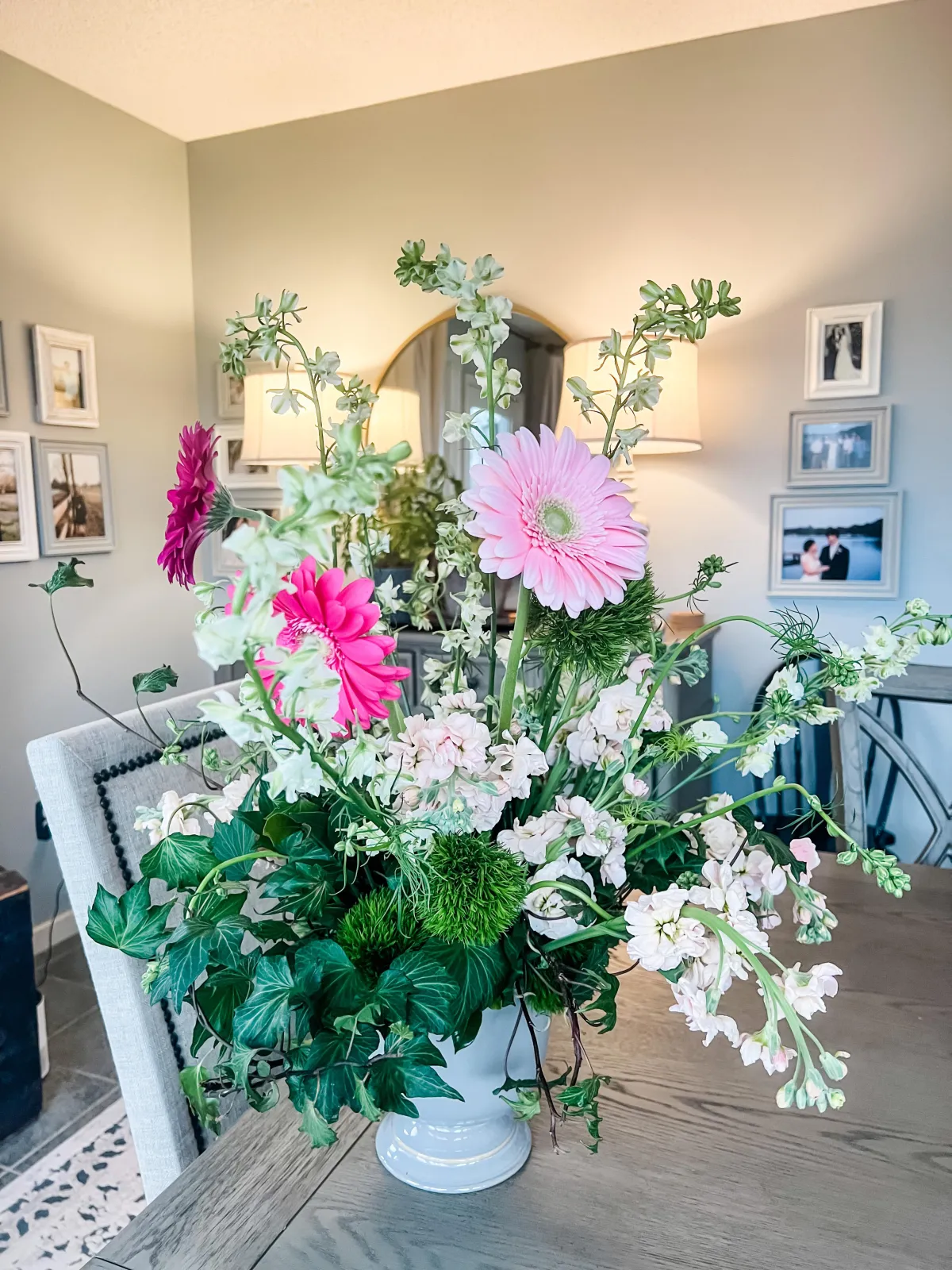
Your wedding bouquet will be in more photos than almost anyone else at your wedding. You’ll hold it for hours. You’ll set it down briefly, pick it back up, toss it (or not — no judgment), and then at the end of the night wonder: what do I actually do with this?
The answer doesn’t have to be “put it in a vase and watch it slowly die by Tuesday.” Your wedding flowers can become a keepsake that lasts years, or even decades. Here’s a complete guide to every method for preserving your wedding bouquet.
First: What to Do the Night of the Wedding
Regardless of which preservation method you choose, the single most important factor is how you handle the flowers in the hours immediately after the reception.
Do this:
- Keep the stems in water as long as possible
- When you’re done for the night, re-cut the stems at an angle and place in cool water
- Store in a cool, dark place (not the bathroom, which tends to be humid and warm)
- Don’t refrigerate near fruits or vegetables — ethylene gas from ripening produce accelerates flower wilting
Avoid:
- Leaving the bouquet in a hot car
- Letting flowers sit without water for more than a few hours
- Misting petals repeatedly (it can cause spotting)
If you’re planning to press or dry your flowers, start the process within 24–48 hours of the wedding for best results.
Method 1: Air Drying (Classic, Easiest DIY)
Air drying is the oldest preservation method and requires zero special equipment.
How to do it:
- Remove any water-absorbing foam or wrapping from the stems
- Separate stems or keep the bouquet loosely together
- Tie the stems with twine and hang upside down in a dry, dark, well-ventilated space
- Leave undisturbed for 2–4 weeks
Best for: Lavender, statice, baby’s breath, dried pampas grass, wheat, globe thistle, and roses
Honest results: Air-dried flowers shrink, darken, and become brittle. Colors fade significantly. Whites turn ivory/cream. Pinks go dusty mauve. This can be beautiful in a rustic, vintage way — but if you’re hoping to preserve vibrant colors, air drying will disappoint.
Cost: Free
Method 2: Silica Gel Drying (Better Color, More Work)
Silica gel is a granular desiccant that draws moisture out of flowers while preserving their shape.
How to do it:
- Pour 1–2 inches of silica gel into an airtight container
- Lay flower heads face-up on the gel (remove stems or cut very short)
- Gently pour more silica gel around and over each bloom until fully covered
- Seal the container and leave for 2–7 days depending on bloom density
- Carefully uncover and brush away excess gel with a soft brush
Best for: Garden roses, peonies, dahlias, ranunculus — full-petaled flowers that don’t do well with air drying
Results: Much better color retention than air drying. Flowers look more “alive.” However, they’re very fragile after drying and need to be displayed under glass or in a case.
Cost: ~$15–$25 for silica gel at a craft store. Reusable.
Method 3: Pressing (Flat, Frameable, Timeless)
Pressed flowers have had a moment recently — and for good reason. A professionally pressed and framed arrangement from a wedding bouquet is genuinely stunning.
How to do it:
- Separate individual petals and smaller blooms
- Arrange on blotting paper or parchment
- Place inside a heavy book or a dedicated flower press
- Add more blotting paper and weight on top
- Change the paper every 2–3 days for the first week to prevent mold
- Press for 2–4 weeks total
Best for: Flat or naturally thin flowers — sweet peas, pansies, larkspur, wildflowers, ferns, clematis, small petals
Framing: Once pressed, arrange on acid-free paper and frame under UV-protective glass to prevent further fading. Many brides frame pressed flowers alongside their invitation or a photo from the ceremony.
Cost: DIY pressing is essentially free. Framing materials: $20–$80 depending on frame quality.
Method 4: Professional Freeze Drying
Freeze drying is the highest-quality preservation method available. A professional freeze-drying service places your flowers in a specialized chamber that removes moisture at the molecular level while keeping the flower’s structure intact.
Results: The closest thing to “frozen in time.” Colors stay vivid. Flower shapes remain three-dimensional. Your bouquet can be preserved nearly as it looked in your hand.
Cost: $150–$400+ depending on bouquet size and the service provider. Usually displayed in a glass dome or shadow box.
Timing: You typically need to mail your flowers to the service within 24–48 hours of your wedding, which requires planning ahead.
Method 5: Floral Resin
Resin preservation encases individual flowers or small clusters in clear epoxy resin — creating jewelry, ornaments, paperweights, or decorative objects.
Options include:
- Pendant necklaces or earrings with individual petals
- Ornaments (perfect as anniversary gifts)
- Paperweights or tabletop objects
- Ring dishes
Cost: DIY resin kits start around $30–$50. Professional commissions range from $50–$300+.
Important note: Flowers must be fully dried before embedding in resin. Skip this step and moisture will cause cloudiness and mold inside the resin.
Talking to Your Florist About Preservation
Not all flowers preserve equally well. When we design your bouquet, we can discuss which stems are most preservation-friendly if that’s important to you.
- Presses well: Sweet peas, larkspur, anemone, ferns, eucalyptus
- Dries well: Lavender, baby’s breath, roses, statice
- Freeze-dries best: Peonies, garden roses, orchids, ranunculus
- Doesn’t preserve well: Hydrangea (very tricky), tulips, delicate double blooms
If you know you want to preserve your bouquet, mention it at your consultation. It won’t change our design significantly, but we can make small choices that help you down the road.
Want Help Planning Your Florals?
Your bouquet is the most personal piece of your wedding flowers — designed around you, carried by you, photographed with you. Let’s make it beautiful from day one, and give you something worth keeping.
Inquire about your wedding flowers →
We serve couples throughout Anderson, Greenville, Clemson, and Upstate South Carolina.
From full-service planning to partial coordination and support for intimate celebrations and elopements — if you’re getting married in Upstate South Carolina, we’d love to be your florist and planning team.